



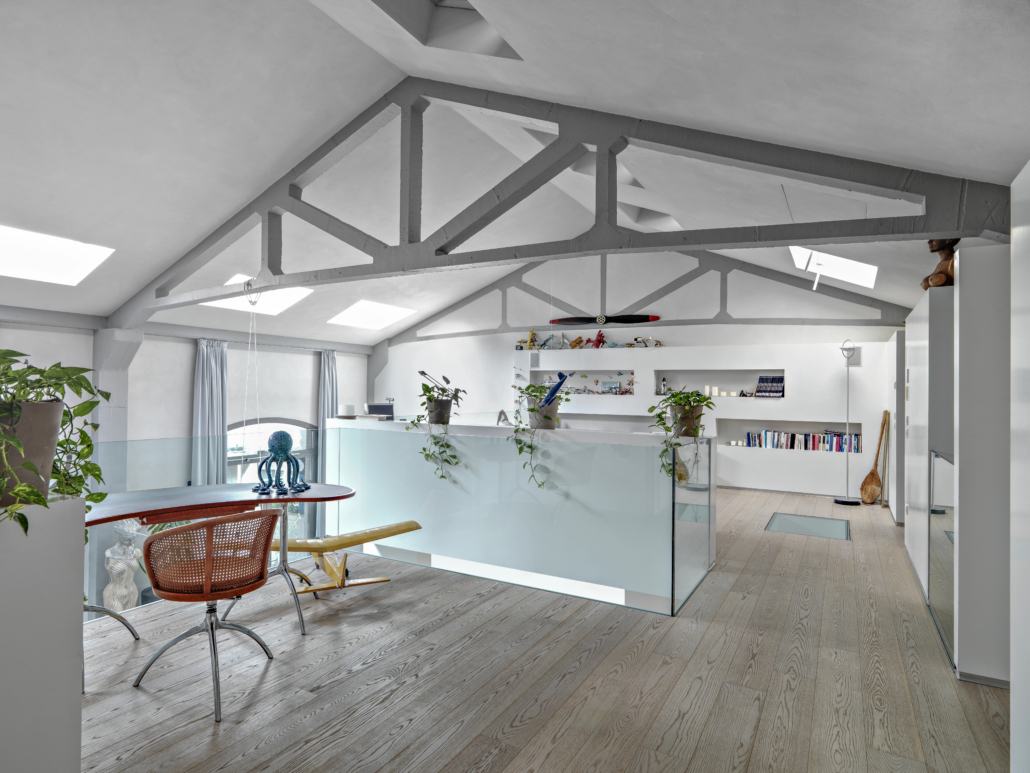
Structural Upgrades Often Needed for Attic Conversions
For Toronto homeowners looking to add living space without building an addition, the attic is an obvious candidate. It’s already there. It sits above the rest of the home. And in many older Toronto homes — where ceiling heights are generous and rooflines are pitched — there can appear to be meaningful square footage waiting to be used.
The reality of converting an attic into livable space is more involved than it looks from below. The gap between an attic as it exists — a storage space, an insulated void, a mechanical chase — and an attic as a legal, habitable room is significant. It involves structural work, systems upgrades, regulatory compliance, and careful design. Done properly, an attic conversion can be one of the most rewarding ways to add space to a Toronto home. Done without the right expertise, it is one of the more consequential projects to get wrong.
Here is what the process actually involves.
Why Attics Aren’t Built for People
The structure of a typical residential attic in Toronto was designed for one purpose: to support the roof above it and provide a buffer between the conditioned living space below and the exterior. It was not designed to support the loads of people, furniture, and the systems required for habitable occupancy.
This distinction has direct structural implications. The floor of an attic — which is the ceiling of the floor below — is typically framed with ceiling joists rather than floor joists. Ceiling joists are sized to carry the weight of a finished ceiling and whatever insulation sits above it. They are not sized to carry the live loads that a floor must support: people, furnishings, bookshelves, storage. In most older Toronto homes, the ceiling joists in the attic are simply not adequate for habitable use without structural reinforcement.
The roof structure itself presents a related challenge. Traditional roofs in older Toronto homes are built with a system of rafters, collar ties, and in some cases knee walls that create the sloped ceiling profile of the attic space. Much of the structural work that holds the roof together runs through the middle of the space — which is exactly where headroom and usable floor area need to exist. Converting the attic to habitable use without compromising the roof structure requires a structural solution that either reinforces the existing system or replaces it with one that achieves the same structural function in a way that doesn’t consume the usable space.
The Key Structural Upgrades
Floor structure reinforcement. The first and most fundamental upgrade in almost every attic conversion is the floor. Ceiling joists that aren’t adequate for live loads must be either sistered — meaning new joists are added alongside the existing ones to increase the combined capacity — or replaced with new framing sized for floor loads. The specific solution depends on the span, the existing joist size and spacing, and the intended use of the space. A structural engineer must assess the existing framing and specify the appropriate upgrade before any other work proceeds.
Roof structure modification. In homes with traditional rafter-framed roofs, converting the attic to habitable use typically requires modifying the roof structure to clear the space. This often involves installing a structural ridge beam — a horizontal beam at the peak of the roof that carries the load previously distributed through the rafter system — which allows the collar ties and other intermediate framing members that run through the attic to be removed or relocated. This is skilled structural work that requires engineering and careful execution. It is also one of the elements that most significantly affects the cost and complexity of an attic conversion.
Dormers for headroom and light. Even with a clear structural approach, the usable area within a pitched roof is constrained by headroom. Ontario’s Building Code requires a minimum ceiling height of 2.1 metres over at least 50 percent of the floor area in a habitable room, and the floor area below 1.5 metres in ceiling height does not count toward the room’s minimum required area. On homes with steeper pitches, this is achievable within the existing roofline. On homes with shallower pitches, it is not — and adding one or more dormers is often the only way to create adequate headroom over a meaningful area of the floor. A dormer also brings natural light and ventilation into a space that, without it, may have no windows at all.
Stair access. A habitable attic room requires a permanent, code-compliant staircase. This is one of the most space-consuming aspects of an attic conversion because a proper stair requires a meaningful opening in the floor below and a run that meets minimum tread depth, riser height, and headroom requirements. Finding a location for the stair that works structurally, doesn’t consume more of the floor below than the homeowner is willing to give up, and provides adequate headroom at the top is a genuine design challenge — and one that needs to be solved before the rest of the project can be properly planned.
Insulation and thermal performance. An attic that currently serves as the home’s primary insulation layer needs to be completely rethought when converted to habitable use. The insulation moves from the floor of the attic to the roof assembly — the underside of the rafters or a new roof structure — which changes how the building envelope works and introduces the risk of condensation and moisture problems if not designed correctly. Getting the insulation and vapour control right in an attic conversion is both critical and technically nuanced. It requires an understanding of building science, not just construction practice.
Mechanical systems. Heating, cooling, and ventilation must be extended to the new space. In most cases, the existing mechanical system wasn’t sized or configured to serve an additional room at the top of the home — and heat rises, which means the attic can be the hardest space to condition comfortably in both summer and winter. A proper mechanical solution, whether an extension of the existing system or a dedicated unit for the attic space, needs to be designed as part of the project rather than figured out after the fact.
Electrical. New lighting, outlets, and in many cases a dedicated circuit for the space must be installed and connected back to the panel. Depending on the age of the home and the existing electrical system, this may also trigger a review of the panel’s capacity.
Egress. One of the most important and often overlooked requirements for a habitable attic room in Toronto is egress — a means of escape in the event of a fire. The Ontario Building Code requires that every sleeping room have an operable window that meets minimum size and height requirements for emergency egress. In an attic conversion, this typically means a dormer or roof window specifically sized and positioned to meet this requirement. This is not optional, and it cannot be satisfied by the staircase alone.

Laws and Regulations in Toronto
An attic conversion to habitable use requires a building permit in Toronto without exception. The permit process involves submitting drawings that demonstrate compliance with zoning bylaws and the Ontario Building Code, followed by mandatory inspections at key stages of construction.
From a zoning perspective, the relevant considerations are building height and floor space index. Converting an attic to habitable use does not typically increase the building’s footprint or exterior height, but it does add to the total floor area — which counts against the property’s permitted floor space index. In many Toronto residential zones, existing homes are already at or near their permitted FSI, which can make this a binding constraint on the project. This needs to be confirmed during the planning stage, before any design work is invested.
The Ontario Building Code governs the habitability requirements for the converted space in detail: minimum ceiling heights, minimum room areas, natural light and ventilation requirements, egress, fire safety, and the structural performance standards that the floor and roof assembly must meet. All of these apply in full to an attic conversion, regardless of how the space was previously used.
If the attic is being converted to a secondary suite — a self-contained dwelling unit — additional requirements apply, including fire separation from the rest of the home and independent mechanical systems. This is a more complex regulatory path than converting the attic to a room within the primary dwelling, and it requires a permit application specifically for a secondary suite.
Is Your Attic a Good Candidate for Conversion?
Not every attic is a practical candidate for conversion, and understanding the constraints of a specific attic before committing to the project is essential. The factors that matter most are the pitch of the roof, the span of the floor below, the condition of the existing framing, the height of the exterior walls at the attic level, and the available location for a stair within the home below.
Steeper-pitched roofs — common in Victorian and Edwardian homes — generally offer more usable headroom and are better candidates for conversion without dormers. Shallower-pitched roofs may require significant dormer work to create adequate habitable area. On some homes, the math simply doesn’t work: the cost of the structural work, dormers, stair, and systems upgrades required to meet code exceeds what the project is worth relative to alternatives.
A thorough assessment by an experienced team — one that evaluates the structural, zoning, and design feasibility of the conversion together rather than in isolation — is the only reliable way to understand whether an attic conversion is the right path for a specific home.
Frequently Asked Questions
Do I need a structural engineer for an attic conversion? Yes. Any attic conversion that involves floor reinforcement, roof structure modification, or dormer addition requires a structural engineer to assess the existing framing and specify the required upgrades. At Novacon, structural engineering is coordinated as part of our design-build process — it’s integrated from the start, not added at the end.
Can I add a bathroom to a converted attic? Yes, though it requires running plumbing supply and drain lines up from the floors below — which can be complex depending on the home’s layout and existing plumbing configuration. The weight of a bathroom also has structural implications for the floor framing. These are solvable challenges, but they need to be accounted for in the project scope from the beginning.
Does an attic conversion add value to a Toronto home? Generally, yes — a well-executed attic conversion that adds a legal, habitable room or bedroom adds measurable value to a Toronto property. The key word is well-executed: a conversion that meets all code requirements, has adequate headroom, good natural light, and proper systems will contribute to the home’s value. One that was done without permits or doesn’t meet habitability standards creates problems at the time of sale.
How long does an attic conversion take? A typical attic conversion project takes between 3 and 6 months from permit approval to completion, depending on scope. Projects involving significant dormer work or secondary suite compliance will be at the longer end of that range.
Ready to Find Out If Your Attic Can Work?
If you’re considering an attic conversion in Toronto and want to understand what your home’s specific conditions would involve, we’d be glad to start the conversation.
Schedule a consultation with Novacon Construction.
Novacon Construction is an award-winning design-build company based in Toronto, Ontario. Specializing in custom homes, major home additions, and ADUs, Novacon has been delivering high-quality residential construction since 2004.

Experience the difference of what working with a real client-centric contractor specialist feels like.
- Is It Better to Build an Addition or Move? - August 18, 2026
- What Determines the Size of a Home Addition You Can Build? - August 18, 2026
- How Much Does a Home Renovation Cost in Toronto? A Complete Breakdown - August 4, 2026