




What’s the Difference Between a Laneway Suite and a Garden Suite?
If you’ve been researching ways to add a secondary dwelling unit to your Toronto property, you’ve likely come across both terms. Laneway suites and garden suites are both detached, self-contained homes built on existing residential lots — and from a distance, they can seem like variations of the same idea. But they are distinct in meaningful ways: where they can be built, who can build them, and how they function on the property are all different.
Understanding the distinction matters before you start planning — because the type of suite your property can support isn’t a design decision, it’s a zoning reality. Here’s a clear breakdown of both.
What Is a Laneway Suite?
A laneway suite is a detached residential unit built at the rear of a lot that backs onto a public laneway. Toronto has an extensive network of laneways — the narrow service roads that run behind residential properties, originally used for garage access and utility services — and these laneways are what make laneway suites possible.
The laneway is not just a location reference. It’s a functional requirement. To qualify for a laneway suite, a property must abut a public laneway, and the suite must be designed so that it can be serviced from that laneway — meaning pedestrian access, and in many cases vehicle access, comes from the lane rather than the primary street. This keeps the front of the property and the main home’s relationship to the street intact.
Laneway suites were formally permitted in Toronto in 2018, making the city one of the first in North America to establish a clear, purpose-built approval framework for this type of structure. Since then, hundreds have been built across the city’s established neighbourhoods — particularly in areas like Leslieville, The Annex, Roncesvalles, and other older residential neighbourhoods where laneways are common.
A laneway suite is a fully independent dwelling. It has its own entrance, kitchen, bathroom, living space, and address. It can be rented to a tenant, used as a home for a family member, or occupied by the homeowner while the main house is rented out. The suite and the primary dwelling share the same lot but function independently on a day-to-day basis.
What Is a Garden Suite?
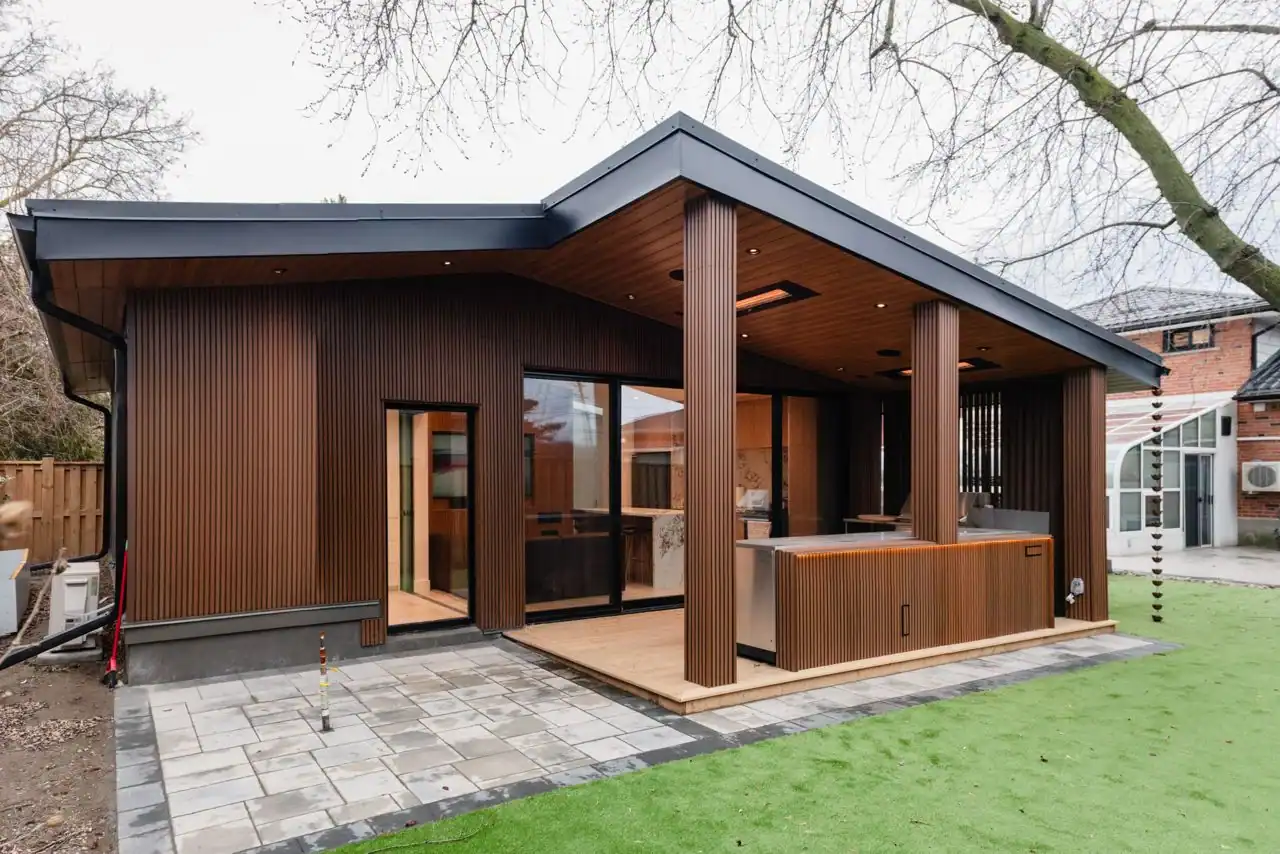
A garden suite is also a detached, self-contained residential unit on an existing residential lot — but it does not require a laneway. A garden suite sits within the rear yard of the property and is accessed from the primary street or through the property itself, rather than from a lane.
Garden suites were approved city-wide in Toronto in 2022, expanding the opportunity for secondary detached units to the large number of properties that don’t have laneway access. This was a significant shift — it opened up the option for a detached secondary unit to the majority of Toronto’s residential lots, not just those with the geographic advantage of an abutting lane.
Like a laneway suite, a garden suite is a fully independent dwelling with its own kitchen, bathroom, sleeping area, and entrance. The key distinctions are where it sits on the lot, how it is accessed, and the specific zoning rules that govern its size, height, and setbacks.
The Key Differences
While both suite types serve similar purposes, the differences between them are important to understand as you assess which is possible — and preferable — for your property.
Lot eligibility. A laneway suite requires a property that abuts a public laneway. If your property doesn’t back onto a lane, a laneway suite is not an option — regardless of how large your lot is. A garden suite, on the other hand, is available to most Toronto residential properties, with or without laneway access. This makes garden suites accessible to a much broader range of homeowners.
Access and servicing. Laneway suites are typically accessed directly from the lane — which is one of their practical advantages. It means the suite’s comings and goings don’t affect the primary home’s front yard, driveway, or relationship to the street. Garden suites, by contrast, must be accessed through the property itself, which requires a pathway from the street or side yard. This affects both the design of the suite and how the lot functions overall.
Size and height allowances. Both suite types are subject to maximum size and height limits under Toronto’s zoning bylaws, but the specific rules differ. Laneway suites have established guidelines that have been refined since 2018. Garden suite regulations, being newer, have their own framework. In both cases, the permitted size is influenced by the dimensions of the lot and the existing structures on it. Understanding what’s achievable on your specific property requires a zoning review — general guidelines give a starting point, but your lot’s exact dimensions, existing coverage, and zone determine what can actually be built.
Setback requirements. Both types require minimum setbacks from property lines, but the specifics differ between the two frameworks. Laneway suites are typically positioned close to the rear property line, adjacent to the lane. Garden suites must maintain setbacks from the rear and side property lines that are generally somewhat more generous, since there is no lane to buffer the structure from neighbouring properties at the rear.
Visual and functional impact on the lot. A laneway suite, tucked against the rear property line with its entrance from the lane, tends to have a relatively contained footprint within the rear yard. A garden suite occupies the rear yard more visibly and requires a clear pathway through the lot. The impact on outdoor living space, privacy, and the overall feel of the property is something to work through carefully during the design phase.
Can a Property Have Both?
In some cases, yes — and this is where multi-unit development on a single Toronto residential lot becomes genuinely interesting. Toronto’s zoning now permits up to three residential units on most residential lots: the primary dwelling, one secondary suite within the home, and one detached accessory dwelling unit in the rear yard.
For properties that abut a laneway, that detached unit is typically a laneway suite. For properties that don’t have laneway access, it’s a garden suite. In both cases, combining the detached suite with a secondary suite within the main home creates a three-unit configuration on a single residential lot — a meaningful opportunity for rental income, multi-generational living, or long-term property value.
Whether this configuration is viable depends heavily on the specific lot — its size, existing coverage, setbacks, and servicing capacity. It’s not the right fit for every property, but for lots that can support it, the financial and functional case is compelling.
Which One Is Right for Your Property?
For most homeowners, the answer starts with a simple question: does your property abut a public laneway? If it does, a laneway suite may be the more architecturally elegant solution — accessed independently, tucked efficiently at the rear, with minimal impact on the front of the property. If it doesn’t, a garden suite is the path forward.
Beyond eligibility, the choice involves thinking through how the suite will be used, how much rear yard space you’re willing to give up, how access will work, and what the construction process involves for your specific lot. These are exactly the kinds of questions a planning conversation with an experienced ADU builder is designed to answer.
At Novacon, we’ve built both laneway suites and garden suites across Toronto. We know how the zoning and permit process works for each, and we approach every project with the same planning-first, design-integrated process that we bring to custom homes and major additions. The goal is always the same: a well-built, well-designed structure that works for the people who use it and adds lasting value to the property.
Frequently Asked Questions
Do I need a permit to build a laneway suite or garden suite in Toronto? Yes. Both require a building permit, and both must comply with the Ontario Building Code in addition to Toronto’s zoning bylaws. At Novacon, we manage the full permit process on your behalf as part of our design-build service.
How much does it cost to build a laneway suite or garden suite in Toronto? Costs vary depending on the size, design, and site conditions, but a well-built detached suite in Toronto typically starts in the range of $350,000 to $500,000 or more, depending on scope. A site assessment and proper design process is the best way to develop an accurate budget for your specific project.
How long does it take to build a laneway or garden suite? From the start of design to project completion, most laneway and garden suite projects take between 12 and 18 months, with a significant portion of that time in the design, permit, and approval stage. Construction itself typically takes 4 to 6 months once permits are in hand.
Can I use a laneway or garden suite as a short-term rental? Toronto’s short-term rental regulations require that the property be your principal residence. If you’re planning to list the suite on a short-term rental platform, it’s important to review the City’s licensing requirements carefully, as the rules around secondary and detached suites in this context continue to evolve.
Is a laneway suite or garden suite considered part of my home for mortgage and tax purposes? This depends on how the unit is structured and registered. We strongly recommend speaking with a mortgage professional and an accountant before proceeding, as the financial and tax implications of adding a secondary dwelling unit can be meaningful — and vary depending on how the property is used.
Ready to Explore What’s Possible on Your Property?
If you’re considering a laneway suite or garden suite in Toronto and want to understand what your lot can support, we’d be glad to start the conversation.
Schedule a consultation with Novacon Construction.
Novacon Construction is an award-winning design-build company based in Toronto, Ontario. Specializing in custom homes, major home additions, and ADUs, Novacon has been delivering high-quality residential construction since 2004.

Experience the difference of what working with a real client-centric contractor specialist feels like.
- What Goes Wrong When Design and Construction Aren’t Aligned - June 30, 2026
- Attic Conversion vs Home Addition: Which Adds More Value? - June 30, 2026
- Can You Convert Part of Your Home Into a Legal Secondary Suite in Toronto? - June 18, 2026